
San Marcos family law
How to File for Custody From San Marcos
San Marcos custody cases file at the North County Regional Center in Vista with form D-049. When custody is contested, Family Court Services counseling is required.
- California dissolution, custody and support
- Family lawCalifornia dissolution, custody and support
- Family cases filed in the North County Division
- San MarcosFamily cases filed in the North County Division
- Child support through the court or DCSS
- SupportChild support through the court or DCSS
- Confidential, private case handling
- DiscreetConfidential, private case handling
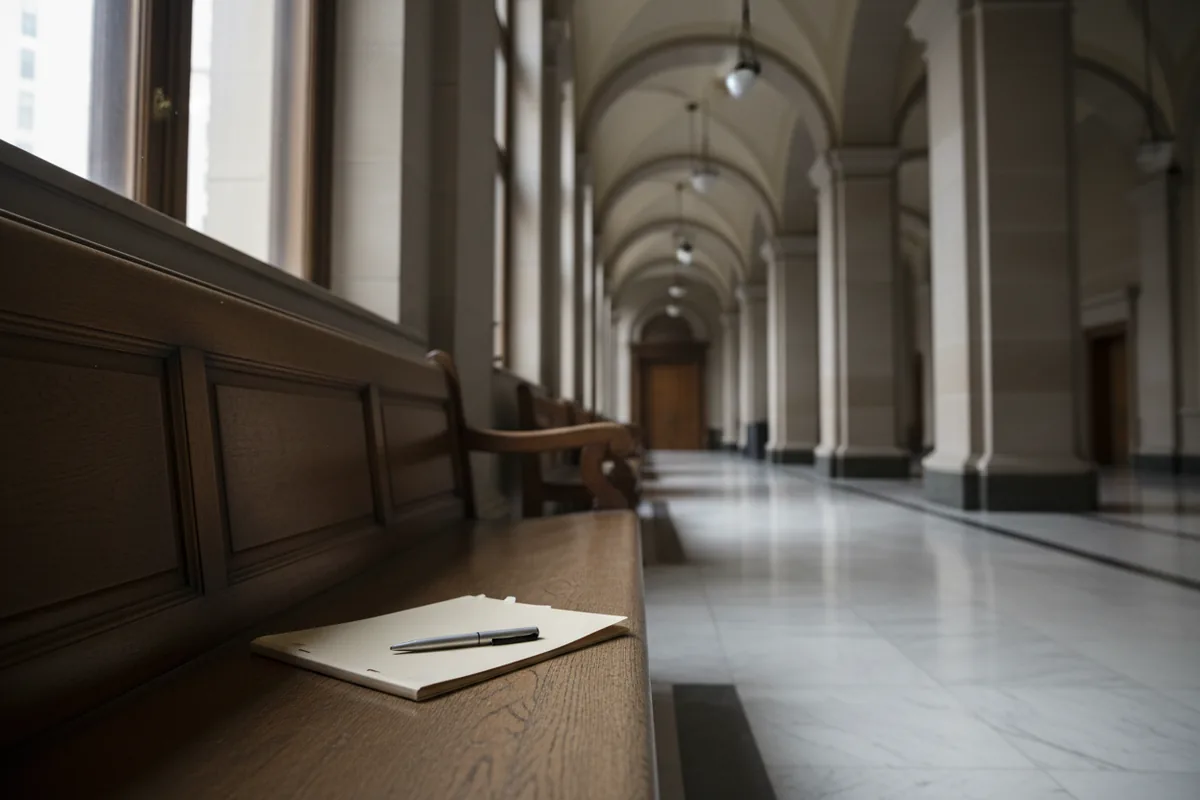
A parent in San Marcos files for custody at the North County Regional Center, 325 South Melrose Drive, Vista. The first filing includes the court's venue form, D-049. A custody request in a family case also includes form FL-105. If the parents disagree about custody, the court sends them to Family Court Services for counseling before a judge decides.
You may be in the middle of a separation, raising a child with a partner you never married, or holding papers the other parent just filed. Most people facing this process have never set foot in a family courthouse. They are trying to work out what to file, where to file it, and what happens to their child's schedule while the case moves forward. This guide walks through the process in order, using the rules of the San Diego Superior Court, which hears San Marcos cases, and the California law the judge applies.
The process has five steps. A person identifies the case type and the court, completes the forms, files and serves them, attends Family Court Services if custody is contested, and goes to a hearing that ends with an order. Free help with forms is available at the court at every stage.
Before You Start: What California Custody Law Decides
Custody has two parts, and a court order usually addresses both:
- Legal custody is the right to make decisions about a child's health, education and welfare.
- Physical custody is where the child lives and how time is divided between the parents.
Either kind can be shared by both parents or given to one.
The test is the child's best interest. California law makes the child's health, safety and welfare the court's primary concern (Family Code section 3020(a)). The same section states a policy of frequent and continuing contact with both parents after they separate, except where that contact would not be in the child's best interest (section 3020(b)). If those two policies conflict, the order must protect the child's health, safety and welfare and the safety of all family members (section 3020(c)).
Under Family Code section 3011, a judge weighing best interest must consider several factors, among any others the court finds relevant:
- the child's health, safety and welfare
- any history of abuse by a parent or other person seeking custody
- the nature and amount of the child's contact with both parents
- habitual or continual illegal drug use, or habitual or continual abuse of alcohol or prescribed controlled substances, by either parent
Section 3040(e) says the law creates no preference or presumption for joint legal custody, joint physical custody or sole custody. That leaves the court and the family wide discretion to choose a parenting plan that fits the child.
Three kinds of cases. A custody request usually arrives in one of three ways:
- Dissolution (divorce). Custody is part of a married couple's divorce case.
- Parentage. Unmarried parents file a case that establishes who the legal parents are and then addresses custody.
- A request for order in an existing case. A parent asks the court to make or change custody orders in a case that is already open.
Where San Marcos files. The court's ZIP Code List (form ADM-254) assigns family cases to a court division by ZIP code. All four San Marcos ZIP codes are assigned to the North County Division: 92069, 92078, 92079 (post office boxes) and 92096. The 92096 code belongs to a specific organization, Cal State San Marcos, so a parent who lives or receives mail on campus files in the same division as everyone else in the city.
Step 1: Identify Your Case Type and the Right Court
The San Diego Superior Court's local family rules treat each family court location as "a separate division and a separate venue according to zip code." Venue is the court location where a case belongs. Because San Marcos ZIP codes are assigned to the North County Division, a privately filed custody, divorce or parentage case from San Marcos is filed at:
Superior Court of California, County of San Diego, North County Regional Center, 325 South Melrose Drive, Vista, CA 92081.
The DCSS exception. The Department of Child Support Services (DCSS) is the public agency that can open and enforce child support cases. The local rules say DCSS matters "are the only exceptions to the zip code filing rule" along with surrogacy and embryo matters, and "must be filed in the Central Division." A DCSS case is filed at the Superior Court of California, County of San Diego, Central Courthouse, 1100 Union Street, San Diego, CA 92101. That applies even when every family member lives in San Marcos. It is a different route from a custody case that a parent files personally, which stays in the North County Division.
The venue declaration. Local Rule 5.1.5 states: "All initial case filings must include a completed Family Law Certificate of Assignment Venue Declaration (SDSC Form #D-049)." This form tells the court why the case belongs in the division where it is filed.
The custody declaration. The same rule adds that in DF cases, which is the court's designation for family law cases, the first filing of a request for a domestic violence temporary restraining order, or of a request for order (RFO) for child custody or visitation, must include form D-049 and a completed Declaration Under Uniform Child Custody and Jurisdiction Act (JC Form FL-105). A request for order is the form a parent uses to ask the judge to make a specific order inside a case.
This step takes only the time needed to read the case type correctly. It matters because papers filed in the wrong division, or filed without the venue declaration, fall short of the local rule.
Step 2: Gather and Complete the Required Forms
Two form numbers are fixed by the local rule for San Marcos filers:
- Form D-049, the venue declaration, with every first filing in a family case.
- Form FL-105, the custody jurisdiction declaration, with the first custody or visitation request for order, or the first domestic violence temporary restraining order request, in a DF case.
Beyond those two, the papers depend on the case type. A divorce starts with a petition and related Judicial Council forms. A parentage case uses its own petition. A request in an existing case uses the request for order and its supporting declarations. The Judicial Council is the body that writes California's statewide court forms.
The court's self-help services provide these forms and help people prepare them. The Office of the Family Law Facilitator is a free court office. It appears in the court's North County self-help listing, and the court describes its services as "one on one assistance and workshops – information and forms preparation on divorce (workshop only), parentage, child and spousal support, child custody and visitation, and domestic violence where assistance through a domestic violence clinic is not available." A San Marcos parent does not need to go to a different courthouse to use it.
The court's Self-Help Contact Information page notes several limits: Self-Help Center lawyers are not the parent's lawyer, what a parent says to the staff or lawyer is not confidential, and parties on both sides of a case may be helped by the same attorney or staff person.
Cost. The court sets the current filing fee and lists it. The clerk's office or the court's website gives the amount in effect. This guide does not state a figure.
Step 3: File Your Papers and Serve the Other Parent
Filing means submitting the completed forms to the clerk at the North County Regional Center. The clerk opens the case, or adds the request to an existing case, and returns copies that show the filing. For a request for order, the court sets a hearing date.
The San Diego Superior Court lists a Family Law e-Filing FAQ among its family resources.
Service is a separate step. Filing tells the court about the case. Service of process is the formal delivery of the filed papers to the other parent, so that parent has notice and a chance to respond. A parent generally cannot serve their own papers. Another person delivers them and then signs a record showing when and how delivery happened. The rules on who may serve, how, and by when depend on which papers are involved. The Family Law Facilitator can explain those rules for a particular filing.
When the other parent files the case, the steps run in reverse. The responding parent receives the papers and files a response. If custody is in dispute, both parents move into Step 4.
Step 4: Attend Family Court Services If Custody Is Contested
For many parents, this is the step they worry about most: sitting in a room with the other parent and a stranger and talking about their child. Knowing how the step works usually makes it easier.
It is required. Family Code section 3170(a) says that when a petition, application or other pleading to obtain or modify a custody or visitation order shows that custody, visitation or both are contested, "the court shall set the contested issues for mediation." Contested means the parents disagree. In San Diego County, this mediation takes the form of child custody recommending counseling, which is provided under Family Code sections 3170 and 3183. The court's Family Court Services page states that section 3170 "mandates that the case be set for child custody recommending counseling prior to the court hearing."
What Family Court Services does. According to the court's Family Court Services page, Family Court Services (FCS) "provides child custody recommending counseling in family law cases when separating or divorcing parents cannot agree on a child custody sharing plan." The session takes place in a private office with a Family Court Counselor. The court says it lasts about 1.5 to 2.5 hours, and the court offers an orientation video in English and Spanish. For San Marcos cases, the court lists the location as the North County Courthouse at 325 S. Melrose Dr., Vista, CA 92081.
The counselor can make a recommendation. Under Family Code section 3183(a), the mediator may, consistent with local court rules, submit a recommendation to the court about custody or visitation. The mediator must first give that recommendation in writing to the parties and their attorneys before the hearing. The statute calls this person a child custody recommending counselor. Family Court Services calls the same person the Family Court Counselor. Section 3183 also allows the counselor to recommend an investigation, other services, or, in appropriate cases, restraining orders to protect the child while the case is pending.
What happens next depends on whether the parents agree. Family Court Services describes two paths:
- If the parents reach an agreement, it is reported to the court, and the hearing may be cancelled because "the family made its own decision."
- If they do not agree, "a recommendation will be made by the Family Court Counselor and the court hearing will proceed."
The judge makes the decision. The recommendation is one of the things the judge considers.
Domestic violence cases follow their own protocol. Section 3170(b) provides that domestic violence cases are handled by Family Court Services "in accordance with a separate written protocol approved by the Judicial Council." A parent with a protective order, or a parent alleging abuse, is not placed in the standard process as if nothing had happened.
Step 5: The Court Hearing and What Comes After
At the hearing, the judge considers each parent's filed declarations, any evidence and testimony, any recommendation from the Family Court Counselor, and the best-interest factors described above. Section 3183(a) requires the court to ask at the hearing whether the parties and their attorneys received the written recommendation.
A child's voice. If a child is of sufficient age and capacity to form an intelligent preference, Family Code section 3042(a) requires the court to consider that preference and give it due weight. A child 14 or older who wishes to address the court is generally allowed to, unless the court finds that doing so is not in the child's best interest and states its reasons on the record (section 3042(c)). The law does not require any child to state a preference (section 3042(i)).
The order. Once a judge signs a custody order and it is filed, it binds both parents. When abuse or substance-use allegations have been raised and the court still grants custody or unsupervised visitation to that parent, section 3011(a)(5) requires the court to state its reasons. It also requires the order to be specific as to time, day, place and manner of transferring the child. In any custody order, the court may also require a parent to give notice before moving the child's residence for more than 30 days (section 3024).
Agreed plans. Parents who reach agreement, whether before the hearing or at Family Court Services, can submit their parenting plan to the court for approval without a contested hearing. The court still reviews the plan for the child's best interest. When abuse or substance-use allegations are involved, an agreed plan must also be specific about exchanges (section 3011(a)(5)(B)).
Later changes. Section 3170 also covers requests to modify an order. A parent can ask the court to change custody later, usually because circumstances have changed, by filing a new request for order in the same case. The same venue rules apply, and if the change is contested, the counseling requirement applies again.
Free and Low-Cost Help Available in San Diego County
The court's self-help services are free. The court's Self-Help Contact Information page states that "anyone who does not have their own lawyer can get help from the Self-Help Center" and that "it does not matter how much money you make." Walk-in clinics at the courthouses work on a first-come, first-served basis, and staff "can explain procedures and help you prepare forms."
The Office of the Family Law Facilitator is listed for North County and covers the subjects a custody case usually touches:
- one-on-one help with parentage, child and spousal support, and child custody and visitation
- forms preparation for those same matters
- divorce, offered by workshop only
- domestic violence, where help through a domestic violence clinic is not available
Facilitator staff can explain procedure and help with forms. They do not give legal advice and do not represent either parent. The court also offers an orientation video for Family Court Services before the counseling session.
Typical timeline
The court's pages give one timing figure for a custody case: the Family Court Services session lasts about 1.5 to 2.5 hours. Everything else depends on the case. A case moves faster when the parents agree and the hearing is cancelled. It moves more slowly when service is delayed, when the counselor recommends an investigation under section 3183(b), or when the hearing has to go forward on contested issues. Local Rule 5.1.6 requires parties to notify the judicial officer promptly when something, such as an inability to serve on time, might cause a hearing to be rescheduled.
When the process gets complicated
Abuse or safety concerns
Section 3020 states that domestic violence in a child's household is detrimental to the child. Section 3011 lets the court require independent corroboration of abuse allegations, such as law enforcement or agency reports. Family Court Services follows its separate domestic violence protocol in these cases.
Substance-use allegations
Habitual drug or alcohol abuse is a best-interest factor. As with abuse allegations, the court may require independent corroboration before considering it.
A planned move
When an order requires notice of a move, section 3024 calls for notice by return-receipt mail. Where feasible, the notice is given at least 45 days before the move, so there is time to mediate a new agreement.
A child who wants to be heard
Section 3042 sets out how a child's preference is considered and protects the child during the process. When a child is not called as a witness, the court must provide another way to get the child's input.
Mental health questions
If a parent's mental illness is found to be a factor, section 3040(d) requires the court to state its reasons and to give that parent a list of local treatment resources.
This guide does not cover how support is calculated or a full divorce from start to finish. Each of those has its own process.
Talking Through a San Marcos Custody Filing
A custody case raises questions that forms alone do not answer. The case type affects what is filed. Abuse or substance-use allegations change both the counseling process and what the order must say. A parent's own facts determine how the best-interest factors apply. A consultation can look at the child's current schedule, any safety concerns, whether the other parent has already filed, and what the Family Court Services step will involve in that particular case. For a parent who only needs help completing forms, the court's free Family Law Facilitator may be the more useful first stop. To talk through how custody law applies to your family, contact San Marcos Family Law Advocates to request a confidential consultation.
Frequently asked questions
How much does it cost to file for custody in California?
What rights do fathers have in California for child custody?
Is California a 50/50 state for child custody?
What are the requirements for getting full custody of a child in California?
Which courthouse handles custody cases from San Marcos?
Do I need a lawyer to file for custody in California?
What is the UCCJEA form and when is it required?
What happens at Family Court Services in San Diego County?
Attorney Contributor: Amy J. Lass | California Bar No. 246779
Amy J. Lass contributes legal expertise and reviews selected legal content for accuracy. General information only — not legal advice.
- Published
- November 7, 2026
Sources
- California Family Code section 3170 — California Legislative Information
- California Family Code section 3183 — California Legislative Information
- California Family Code section 3011 — California Legislative Information
- California Family Code section 3020 — California Legislative Information
- California Family Code section 3040 — California Legislative Information
- California Family Code section 3042 — California Legislative Information
- California Family Code section 3024 — California Legislative Information
- Local Rules of Court, Division V: Family Law (effective January 1, 2026), Superior Court of California, County of San Diego — Superior Court of California, County of San Diego
- ADM-254 Zip Code List (Rev. 1/25), Superior Court of California, County of San Diego — Superior Court of California, County of San Diego
- Family Court Services, Superior Court of California, County of San Diego — Superior Court of California, County of San Diego
- Self-Help Contact Information, Superior Court of California, County of San Diego — Superior Court of California, County of San Diego
Questions About Your Case?
Divorce and custody questions rarely fit neatly into an article. Send us a message, and we'll listen to what's going on and help you understand your next steps.