
San Marcos family law
Student Parents at CSUSM and Palomar: Custody and Support
California's guideline formula applies to student parents. A court may use earning capacity under Family Code 4058(b), and support generally ends at 19.
- California dissolution, custody and support
- Family lawCalifornia dissolution, custody and support
- Family cases filed in the North County Division
- San MarcosFamily cases filed in the North County Division
- Child support through the court or DCSS
- SupportChild support through the court or DCSS
- Confidential, private case handling
- DiscreetConfidential, private case handling
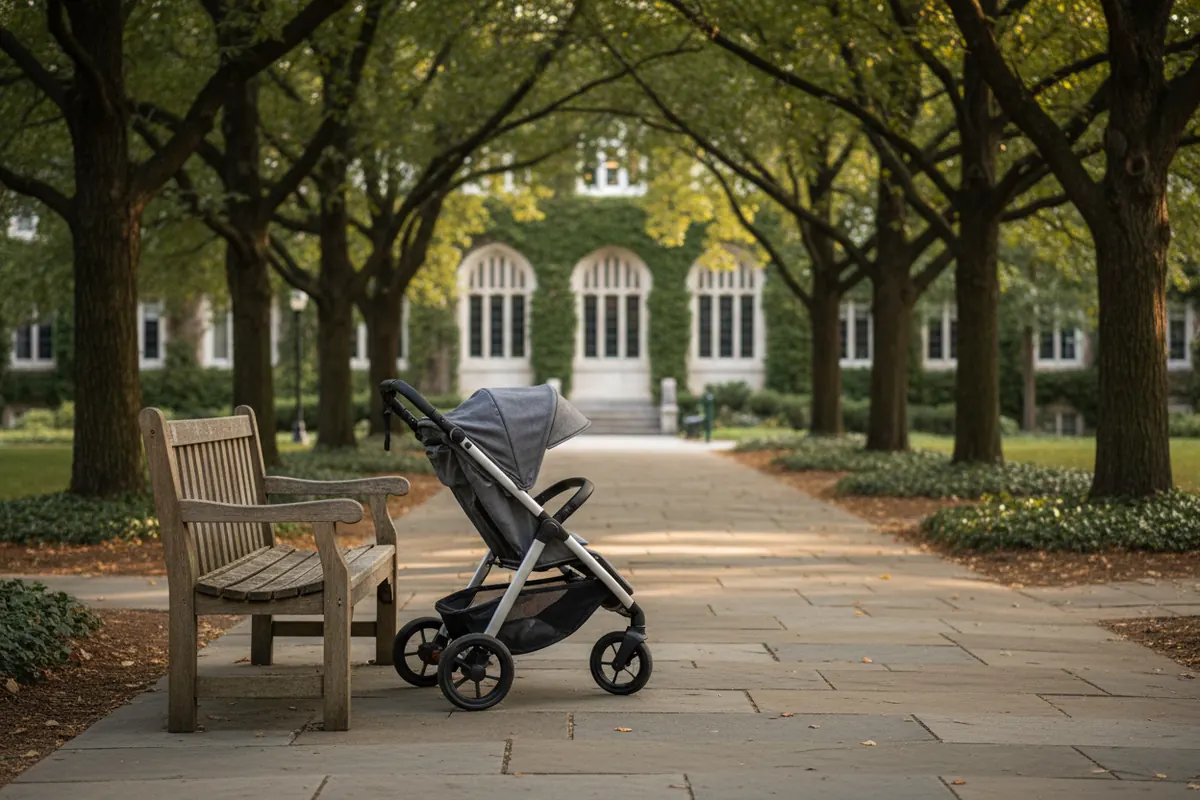
Being a student does not take a parent out of California's child support rules. A court uses the same statewide guideline formula for every parent. When a student's income is low, the court may look at what that parent could earn instead. Custody turns on the child's best interests, and class schedules can be built into a parenting plan.
Most people facing this question are carrying two full loads at once. They may be a parent at CSU San Marcos or Palomar College, splitting time between lectures, a part-time job and a child. A breakup or separation has just turned the budget and the weekly schedule into legal questions. They want to know whether going to school changes what they will pay or receive, and who decides where the child sleeps during finals week. Some are worried that the other parent's enrollment means no support at all.
This page walks through how support is figured for a parent in school, what California counts as income, when support ends, how custody is decided, and where a San Marcos case is filed.
How California Child Support Works for Student Parents
California uses one formula for everyone. The San Diego Superior Court's child support FAQ explains that "California has a statewide uniform guideline formula for figuring out how much child support should be paid." If parents cannot agree, "a judge must decide the child support amount based on the guideline calculation," and "the guideline amount is presumed to be correct."
The formula itself is written into Family Code section 4055. It takes each parent's net monthly income and the share of time each parent has primary physical responsibility for the children, then produces a number. Under Family Code section 4057, that number is presumed correct. The presumption is "rebuttable," meaning a parent can try to show the formula would be unjust or inappropriate in a particular case, but only for reasons the statute lists. The court's FAQ puts it simply: only "in very limited circumstances" can the judge order a different amount.
There is no separate category for students. Nothing in the guideline sets aside a student parent's income or creates a special student amount. What changes is the input. Both parents' incomes feed the formula, and Family Code section 4058, covered in the next section, decides what counts as income and when a court may use earning capacity instead.
The principles behind the guideline, in Family Code section 4053, help explain why. They say "a parent's first and principal obligation is to support the parent's minor children according to the parent's circumstances and station in life," that "both parents are mutually responsible for the support of their children," and that "each parent should pay for the support of the children according to the parent's ability."
In San Marcos, these questions come up for a lot of people. According to its about page, CSUSM is "home to more than 17,000 students," and the university notes that many "balance work, military service, and family responsibilities while pursuing their education." Palomar College's main campus is also in San Marcos, at 1140 West Mission Road.
What Counts as Income Under Family Code Section 4058
Family Code section 4058(a) defines a parent's annual gross income as "income from whatever source derived," with limited exceptions. The list includes commissions, salaries, wages, bonuses, rents, dividends, pensions, interest, trust income, annuities, workers' compensation, unemployment insurance, disability insurance, social security benefits, severance pay, veterans benefits that are not based on need, military allowances for housing and food, and spousal support received from someone outside the case. It also covers business income, meaning gross receipts reduced by the expenses needed to run the business. And in the court's discretion, it can include employee or self-employment benefits.
For a student working a campus job, tutoring, driving for a delivery app or waiting tables, that pay is income. So are unemployment or disability benefits if a parent receives them.
Some money is left out. Under section 4058(c), gross income does not include child support actually received, or income from "any public assistance program, eligibility for which is based on a determination of need." Child support a parent receives for children from another relationship is also excluded.
Earning capacity: what a parent could earn
The rule that matters most for many student parents is section 4058(b). Earning capacity means what a parent could earn, not only what that parent earns now. The statute treats two situations differently. When a parent's income is unknown, "the court shall consider the earning capacity of the parent." When income is known, the statute reads:
"the court may, in its discretion, consider the earning capacity of a parent in lieu of the parent's income, consistent with the best interests of the children, taking into consideration the overall welfare and developmental needs of the children, and the time that parent spends with the children."
That is a discretionary power, not an automatic one. A court is not required to replace a student's actual pay with a higher figure, and enrollment does not automatically keep the figure low either.
When a court does look at earning capacity, section 4058(b)(2) says it "shall consider the specific circumstances of the parent, to the extent known." The statute names many of them: the parent's assets, residence, employment and earnings history, job skills, educational attainment, literacy, age, health, criminal record and other employment barriers, and record of seeking work. It also names the local job market, the availability of employers willing to hire the parent, prevailing earnings in the local community, and other relevant background factors.
For a student parent, several of those factors point in different directions at once. A parent who left a full-time job to enroll has an earnings history. A parent who has never worked full time, or who is caring for a young child most days, presents a different picture. The statute asks the court to look at the whole person.
Grants, scholarships and financial aid
Students often ask whether financial aid counts. Section 4058 defines income broadly and excludes need-based public assistance, but it does not name grants, scholarships or student loans. How a particular award is treated depends on what the money is and what it pays for, and on how the court reads the facts. There is no single rule in the statute text that answers this for every kind of aid.
When Child Support Ends in California
The court's child support FAQ lists when support ends, including when "the child turns 18 years of age and is not a full-time high school student" or when "the child turns 19 years of age (child support ends at 19 or high school graduation)," whichever occurs first.
That answers the common search question about whether child support can continue after 18 because a child is in college. As a general rule in California, it does not. The end point the court describes is tied to high school and to age 19, not to college enrollment. A parent who is a student, or whose own child is about to start at CSUSM or Palomar, will not find a college-years extension in the guideline.
People also ask which states require support through college. Some states do extend support for a child in higher education, which is part of why the question comes up so often online. California is not one of them as a general rule. Parents remain free to make their own arrangements to help an adult child with school. How such a private agreement would be treated depends on its terms and the facts, and that is a question for a specific case rather than a general page.
Custody Arrangements When Both Parents Are Students
Two student schedules rarely line up neatly, and a parenting plan has to work around lab sections, night classes and shifts. California law sorts custody into two parts. Legal custody is the right to make major decisions for a child, such as schooling and medical care. Physical custody is about where the child lives and who cares for the child day to day. Either can be shared or held by one parent.
The court decides custody based on the child's best interests. Family Code section 3011 lists factors the court must consider, among any others it finds relevant: the health, safety and welfare of the child; any history of abuse; the nature and amount of contact with both parents; and habitual illegal drug use or alcohol abuse by either parent. The same section bars the court from considering a parent's sex, gender identity, gender expression or sexual orientation.
A parenting plan can reflect academic life. Semester breaks, finals weeks, a summer internship, or a term with mostly evening classes can each shape a schedule. Plans built around those realities often look different from one semester to the next.
When parents cannot agree
Custody mediation is not optional when custody is in dispute. Under Family Code section 3170, if a request to obtain or change a custody or visitation order shows that custody, visitation or both are contested, "the court shall set the contested issues for mediation." Domestic violence cases are handled by Family Court Services under a separate written protocol approved by the Judicial Council.
In San Diego County that mediation is child custody recommending counseling with the court's Family Court Services. Under Family Code section 3183(a), and except as section 3188 provides, the mediator, called a child custody recommending counselor, may, consistent with local court rules, make a recommendation to the court about custody or visitation. The counselor must first give the recommendation in writing to the parties and their attorneys, including counsel for any minor children, before the hearing, and the court asks at the hearing whether they received it. Family Court Services, which calls this person the Family Court Counselor, says that if no agreement is reached, the counselor makes a recommendation to the court and the hearing proceeds.
The recommendation carries weight, but it is not the final word. The judge decides custody.
Where San Marcos Cases Are Filed
The San Diego Superior Court assigns family cases to a division by ZIP code. Its ZIP code list (ADM-254) lists San Marcos ZIP codes 92069, 92078, 92079 (a post office box ZIP) and 92096, each marked "NORTH." The list marks 92096 as "SAN MARCOS (CSUSM)," with an asterisk meaning the ZIP code belongs to a specific organization.
Most family law cases from those ZIP codes are filed at the Superior Court of California, County of San Diego, North County Regional Center, 325 South Melrose Drive, Vista, CA 92081.
Cases brought through the Department of Child Support Services (DCSS) follow a different route. They are filed in the Central Division, at the Superior Court of California, County of San Diego, Central Courthouse, 1100 Union Street, San Diego, CA 92101. For a student parent, that means a support case opened through DCSS will not be in the same courthouse as a divorce or custody case filed directly from a San Marcos address.
On-Campus Child Care at CSUSM
Child care is often the piece that makes a class schedule, and a parenting schedule, actually work. CSUSM's Center for Children and Families page describes a child-care center on the CSUSM campus. The center "at its current location opened its doors in 2007," and the page says the 21,000-square-foot Center for Children and Families "currently serves over 150 children." Its client families, the page notes, are CSUSM students, faculty, staff and community members.
The center itself is the source for details on enrollment, cost or eligibility. For a separating parent, where a young child spends weekdays can matter to a parenting plan, because exchanges, pickups and class times often revolve around it.
Palomar College's main campus, mentioned above, is also in San Marcos, so both campuses sit inside ZIP codes the court assigns to the North County Division.
Modifying a Support or Custody Order
Student life rarely stays the same for long, and an order made in a parent's first year may not fit after graduation. The court's child support FAQ explains that a parent "can ask for a change in your child support amount when there is a change in circumstances," giving the example of a change in the amount of time a parent spends with the child.
For student parents, the changes that tend to come up include finishing a degree, starting a full-time job, a sharp rise or drop in either parent's income, or a shift in how parenting time is divided. Whether a given change is enough to alter the order is for the court to decide on the facts.
When support is recalculated, the same guideline formula applies with current figures, and the result is again presumed correct. The court's FAQ suggests re-calculating support first to see whether going back to court is worthwhile, and points to the California Guideline Child Support Calculator, noting that "this calculator only gives you an estimate" and that the amount a judge orders may be different. A request to change custody that the other parent contests goes through the same mediation step described above.
If You'd Like to Talk Through How This Applies to You
The student-parent question is rarely just about a number. It is about how a court is likely to read a particular work history, a specific degree program, a financial aid package and a class schedule that changes every term, and how those facts fit Family Code section 4058 and the best-interests factors. A consultation is the place to walk through those facts, to look at which ones may weigh most in setting support or a parenting plan, and to understand where a San Marcos case would be filed. San Marcos Family Law Advocates practices California family law only.
To talk through how these rules apply to your family, contact San Marcos Family Law Advocates to request a confidential consultation.
Frequently asked questions
Can I get child support if the other parent is also a student and doesn't work?
Does child support continue after 18 if my child is in college?
What states require child support through college?
How does the court calculate child support when one parent is a full-time student?
Do financial aid, grants, or scholarships count as income for child support?
Where do I file a child support case if I live near CSUSM?
Can a child support or custody order be changed after it is entered?
What happens if parents cannot agree on custody?
Attorney Contributor: Amy J. Lass | California Bar No. 246779
Amy J. Lass contributes legal expertise and reviews selected legal content for accuracy. General information only — not legal advice.
- Published
- November 7, 2026
Sources
- California Family Code section 4058 — California Legislative Information
- California Family Code section 4053 — California Legislative Information
- California Family Code section 4055 — California Legislative Information
- California Family Code section 4057 — California Legislative Information
- California Family Code section 3011 — California Legislative Information
- California Family Code section 3170 — California Legislative Information
- California Family Code section 3183 — California Legislative Information
- Child Support Frequently Asked Questions, Superior Court of California, County of San Diego — Superior Court of California, County of San Diego
- ADM-254 Zip Code List, Superior Court of California, County of San Diego — Superior Court of California, County of San Diego
- About CSUSM, California State University San Marcos — csusm.edu
- Our History, Center for Children and Families, CSUSM — csusm.edu
- Campus Maps, Palomar College International Student Program — palomar.edu
Questions About Your Case?
Divorce and custody questions rarely fit neatly into an article. Send us a message, and we'll listen to what's going on and help you understand your next steps.